Showing posts with label screen. Show all posts

Wednesday, 8 April 2015

Have we met? | John Wick Review

Thanks to Cineworld Unlimited, last night I was afforded a viewing of Keanu Reeves’ new film, John Wick, a week before the box office opens. The movie poster - Reeves with smoking guns in both hands, and a black suit reminiscent of his matrix days - was promising. But I hadn’t seen any sign of this film in movie theatres yet; no preview, no trailer, no trace. I didn’t know what to expect. And yet somehow, this film was not what I expected. 


The first twenty minutes were extremely calm; even sombre. We meet John Wick, a normal guy, who has just lost his wife to a mystery illness. Anyone with a soft-centred heart is roped in when a tiny puppy, a gift from Wick’s late wife, arrives on his doorstep. We’re reminded of PS I Love You. We see a grieving man getting used to Daisy, a puppy he wasn’t expecting, but probably needed. We’re attached. To them both. 

So heart strings are sufficiently pulled. But don’t be fooled - the atmosphere quickly changes. In a gas-station exchange, we meet Josef (played by Alfie Allen with an impressive russian accent), and the tension in the film is revealed. What is that tension? Wick’s car. Anti-climax? I thought so. At this point I can’t tell who the target audience is - the puppy-loving softie or the car-crazed lad. Give it a few scenes, and we find out exactly what is going on here. 

Brace yourselves, you’re not only about to hear a (very mild) spoiler, but you’re likely going to be a little disturbed. We’re in Wick’s apartment in the middle of the night. Daisy is awake. Wick pulls himself out of bed to let his new puppy out. But, of course, as he trudges down the stairs, he discovers that three Assassin’s Creed-style cloaked figures are waiting for him in his living room. No doubt, a flawlessly choreographed fight scene follows, and Wick is floored. Daisy is crying. A figure is unhooded. It’s Josef, here to claim Wick’s car. Dramatic, right? But what follows is one of the most unnecessary sources of revenge film has ever seen. Josef, tired of the puppy’s yelping and presumably devoid of any human sentiment, utters the words “Shut that dog up”. I don’t need to share gorey details for you to understand what’s happened here. Wick wakes up an indefinite amount of time later, shares a traumatic scene with Daisy - now heart-breakingly lifeless - and finds that his car is gone too. In true Hollywood style, Wick’s fuse is lit, and he spends the rest of his screen time on a revenge-fuelled, murderous rampage in search of Josef.


I’ll admit it, I’m a dog lover - I would die for my black labs, and that’s probably why I felt like this scene was so unnecessary. But animal cruelty aside, I still have a problem with this film. 

Let’s break it down to its basics. 
  1. A guy who wants revenge 
  2. Fast cars 
  3. The Russian Mob 
  4. Guns 
  5. Men 
  6. Bourbon 
It’s everything we’ve seen before, crammed into one film. Don’t get me wrong, it will entertain, but in every scene you’ll find yourself thinking, “Hey, that’s just like (any other fast-car mafia movie)”. The cars are fast, Wick is furious, I am experiencing déjà vu. 

What’s worse is that this movie is crammed full of men. Sure, I sound like a broken record, but it’s absolutely true. There is one woman of note in the entire film, and she is cast as a modern femme fatale - she’s a hot, heeled, hired assassin. The character is an unbearable cliché. If you grasp at straws, there are two other females in the movie… one - Wick’s wife - dies before the film starts, and the other - Daisy - is introduced just to be killed off. So we’re looking at a film where we’re resorting to female dogs to find the women. 

Like I said, this film will keep you entertained for a couple of hours. It’s fast, it’s familiar, and it’s featuring Reeves. But it’s nothing new, it’s textbook, and it’s shamefully male-orientated. All I can really conclude is that this is a man’s movie, and I'm no man. 

Sunday, 5 April 2015

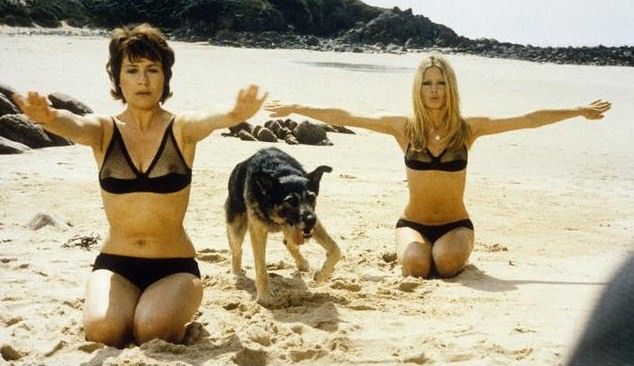
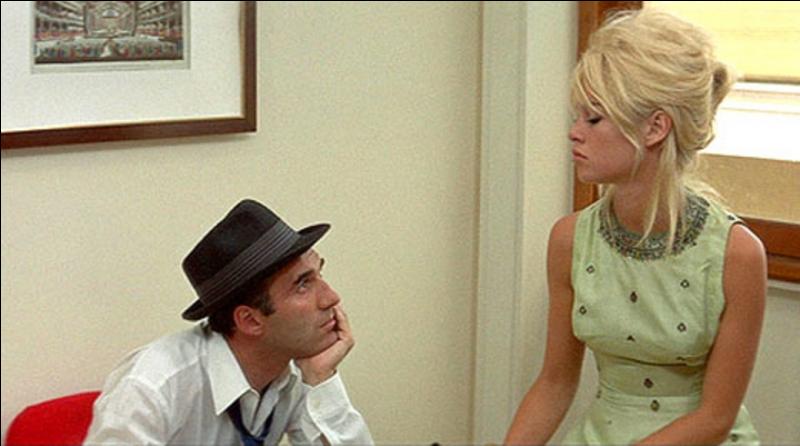
The Formidable French | #4

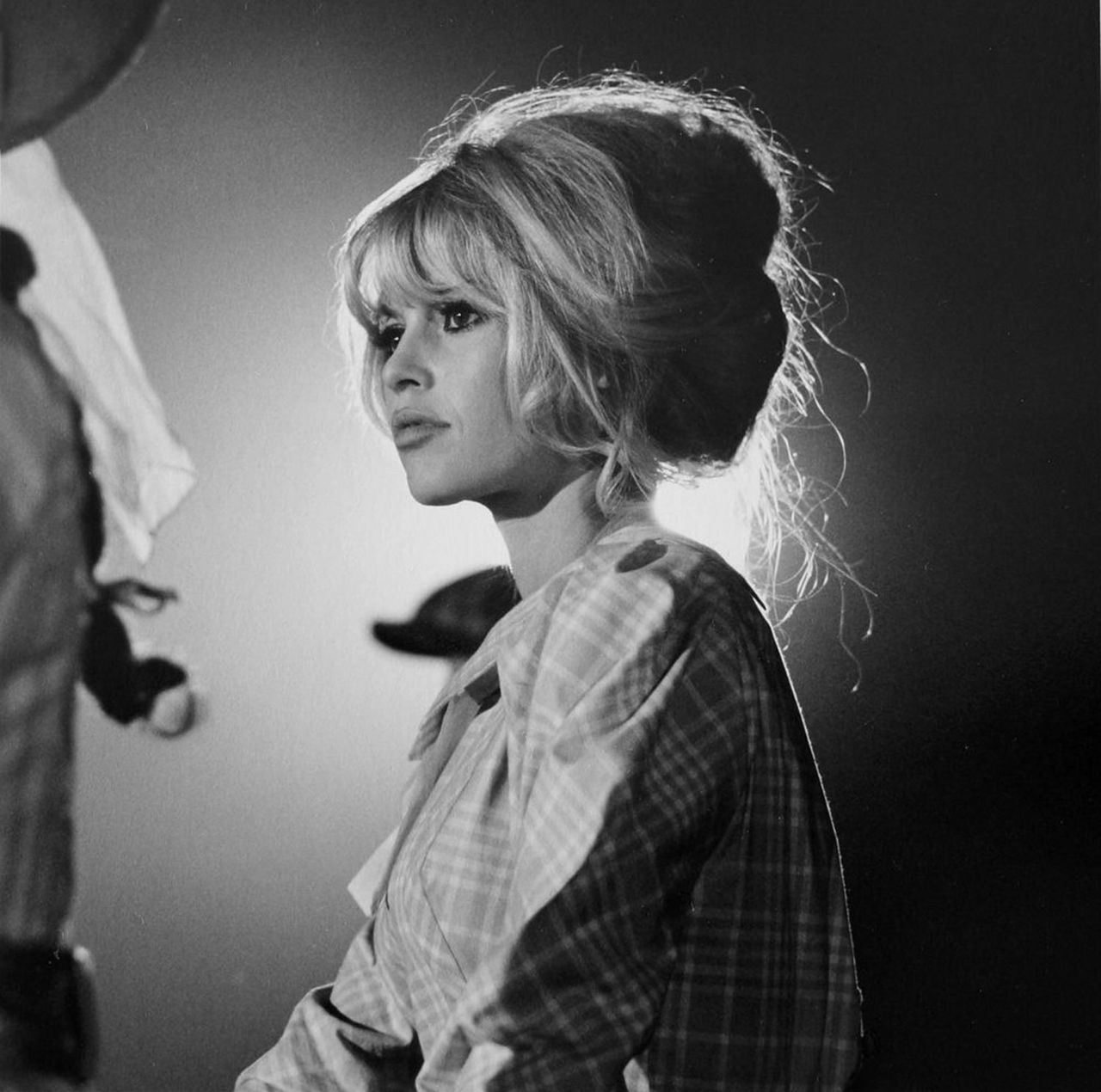
There's no way that any list of stunning French people could be compiled without including the original sex kitten, notre BB. So here she is, in all her glory.


Brigitte Bardot was born in Paris in 1934, and quickly rose to fame thanks to her striking features. She became one of the world's first "sex-kittens": women whose beauty is based in their teenage image. She played a lot of controversial roles, including a role in And God Created Woman - which was heralded by feminists. In fact, she's stirred quite a storm in feminist theory, and was the subject of Simone de Beauvoir's essay The Lolita Syndrome, which discusses teenage girls as sexual objects, and the culture of abuse. 

Aside from the Lolita aesthetic, she brought that gorgeous deliberately-messy style to the world: a mix between wind-swept and perfectly styled hair which we all strive for.

Bardot knew that her capitol was her body, and her roles exploited it. Jean Luc Godard's cast her in Le Mépris as a critique of exactly this - the star body. The problem, though, with depending on your youthful beauty for your career is that, of course, it's finite. As Bardot's looks began to fade, she turned her hand to animal rights activism, and all but disappeared from the silver screen.


post signature

Thursday, 2 April 2015

The Heel Hindrance | The Media's Female Detective

The strong female detective: a feminist liberation, right? Hold that thought. Who's the first female police officer, detective, copper that comes to your mind? The classic Frances McDormund in Fargo? One of the Criminal Minds chicks, maybe, Prentiss? Recently, I started watching the Danish hit-series The Killing, another crime drama with a female detective as the lead. First few episodes, I'm hooked. But then I notice it. The real killer that haunts every show, every film with a female officer - the high heel.


There's nothing wrong with a lady loving her heels. Stiletto, boot, wedge or little blacks, they brighten our wardrobes and make us feel like we can conquer the world. But when I see an unstoppable ladies run into a crime scene or chase a killer, I want to see her being the badass that she is... I don't want to see her struggling to run because she's been stuffed into a heeled boot by a costume designer.
 
Our beloved Emily Prentiss sporting a gorgeously unnecessary black boot in pursuit of a criminal 
Case in point: above, our much-loved Prentiss from Criminal Minds crouches behind a car, pistol in hand, focused on her target, and nicely outfitted in some beautiful black heeled boots. Necessary? Doubtful. "But the Criminal Minds ladies are called out without warning - they don't have time to change!" I hear you cry as you tilt your trilby. I find it hard to believe that in a show where there is a lengthy brief on a private jet, frequent mentions of the "go-bag", and scenes in which the team have had time to put on bullet proof vests, there has been no time for the ladies to slip their heels off. I call bullsh**.
Criminal Minds isn't the only guilty party. Three episodes into the original Danish version of The Killing, detective Sarah Lund has been on a murder case for at least 12 hours. She's dropped her son off at his Grandmother's, sauntered in and out of the office, and gone back to see her Mum. But when she gets within 10 meters of the perp and starts to chase him, what rears its ugly head?

It's blurry, but it's there. When you see it...
Hidden under those from-the-naughties flared jeans are a pair of heeled boots bathed in from-the-naughties female objectification. Clearly this phenomenon isn't purebred Hollywood. But it might be where it came to be.

We all know the phrase femme fatale. The "independent", sexy, fierce woman who wears tight fitting dresses and seductive black heels. She was Hollywood's original "strong woman" (although we've come to know that she wasn't that "strong" at all). Hollywood told us she didn't need a man, thought for herself and had everyone under her thumb. And here's where we see the parallel. Hollywood (and apparently the media in general) wants us to think we're seeing a brilliant, well-written female character, because they know that third-wave feminism demands to see one. But instead of taking the time to write brilliant women, they've just hidden the things that made the femme fatale so obviously man-driven under a thin veil of "independence". 

Take Sarah Lund as an example. What they tell us: she's been the chief detective for what seems like a while; she has a sharp mind; she is a single mum; she doesn't need to wear skimpy outfits to be gorgeous. So she must be a well-written female, right? Wrong. What they don't tell us, but show us: her subplot revolves around her being a mother and giving up her job for that role; she's always wearing heels, despite her job requiring sensible shoes; she wants to move departments, but her male boss is having none of it, and stops her by playing the empathy card and listing off the victim's grievances. What's worse is that she's pitted against the macho new guy, who is the epitome of a male detective, making her, what, the epitome of a female detective? 

I'm not the only one this gets to. This kind of criticism really is everywhere. We're sick of it. So why does it keep happening. We've seen it before and we'll see it again, women were brought onto the silver screen as the object of the gaze, and nearly 100 years, 3 feminist movements and an endless battle against it, women still are the object of the gaze. Even if it is hidden under their flares.
 
post signature

Tuesday, 17 February 2015

Attention! | Focus Review

Thanks to Cineworld Unlimited, I got to see Focus a week before it hit the big screens across the UK. With Will Smith in the main role, Margot Robbie as his wingwoman, and a plot unlike anything we've seen before, expectations were high. And the result? Well, it turns out that to understand Focus, you don't have to follow the instructions on the tin.


First things first, the premise of the film - hustlers hustling - is enough to draw a viewer in without further ado. Much like the TV Series The Hustle and the ever-growing list of films about card-counting, there's something thrilling about watching people get tricked. Within the first half hour, we see Margot Robbie glide around a carnival and lift thousands of dollars worth of belongings right from under the noses of her marks. Part of the fun is how effortless she makes it look. No premeditation, no planning, but flawless execution. And it helps that she looks stunning the entire time too. 

Will Smith reaches a hand out to the ladies in the audience as the husky boss of the team of conmen, with a background worthy of The Godfather and a screen presence not to be forgotten. Decked out in the most perfectly tailored suits, sauve sunglasses and that trimmed-to-a-tee beard, he's the perfect lead for a picture about the high-end hustle.


Put this pair together, and magic happens. Never mind that Smith is twice Robbie's senior, the pair have an undeniable on-screen chemistry. They're both unbelievably cool, laid back and talented. Whereas Robbie has only just made her debut on the silver screen thanks to The Wolf of Wall Street, which put her in line at the Oscars last year, Will Smith has had a life long (and I mean long) career as an actor. You might say they're the Yin and Yang of screen exposure. In a film whose characters require absolute synchronisation, the two are in perfect harmony, a match made in heaven. 

With the help of Apollo Robbins, a real-life, self-proclaimed "gentleman thief", we see hundreds of so called "slight-of-hand" sequences. Essentially, it's a modern day, adult version of Oliver Twist... with rich people. Aside from the impressively slick pick-pocketing scenes, the majority of the film was shot in Buenos Aires, Argentina, and so has a beautiful everlasting-summer atmosphere (apparently a thief only steals in the summer). But is that all the film has to offer?

David Palmer picked up on this, saying that "two likable leads and some colorful locations do not make a great movie, but they certainly help to elevate an otherwise average one". He's not wrong. After the recent trend set out by Scorsese in Shutter Island and Nolan in Inception, we are seeing more and more films end with a completely mind-boggling twist, one that throws audience into debate once they leave the screen; the sort that is discussed on endless online forums. It seems like Focus makes a similar attempt. Obviously, they don't attempt the "unanswerable twist", but their twist - once explained - could be understood by any layman. There's no need to rewatch, no need to discuss. Is the film thrilling? Yes. Is it beautiful? Yes. Is it challenging? Not nearly.

Friday, 12 December 2014

The Formidable French | #3

Part three is famous for his beauty, and he knew it. The face that launched a thousand films, I present to you:
Alain Delon


Anyone who is even vaguely familiar with classical French cinema knows the movie poster for Plein Soleil. It was the film that finally focused the lens on the man's body, rather than the woman's. After nearly a century of objectification, the gaze turned to the man. There are things to be said about Delon not just being the subject of the gaze in Plein Soleil, but also the object, but that's another topic. We're just here for the actor. 

A 30's baby, Delon quickly became known as the James Dean of France (isn't it funny how French actors are all just considered doppelgängers of Americans?). He flaunted his chiseled cheekbones and bathed in the glory of being France's most adored face. He was even called the male Brigitte Bardot. Like most gorgeous French stars, he had a brief marriage with another beauty of the silver screen, Romy Schneider, and a picturesque couple they were.


Like a lot of his predecessors, Delon enjoyed success in Hollywood, and then moved his mind to policiers (much like Gabin) once he started to lose his angelic features.


post signature

Saturday, 1 November 2014

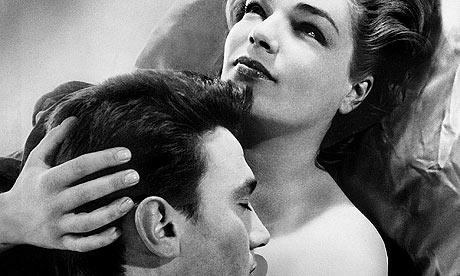
The Formidable French | #2

Part two brings us a timeless beauty, a powerful and wonderful woman hailed as one of France's greatest actresses. Simone Signoret. 


Born in 1921, Signoret was another star of the French classic. After starring in Room at the Top, she became the first French person to win an Academy Award, and gained international fame. She's often been called the Marilyn Monroe of France, because of her striking features and blonde hair. In fact, Signoret and Monroe were close.


During her later years, Signoret received a lot of criticism for gaining weight and letter go of her looks (welcome to the Woman's world), but in reality she aged with impeccable grace.


post signature

Tuesday, 30 September 2014

The Formidable French | # 1

The start of second year has come, and I'm overly excited to be taking a module in French cinema. I've always loved film (can you tell?) and wanted to take a deeper look into it, so this module seems perfect to me. We're only a few weeks into the course, but so far I've learnt that French stars from the 20th Century were beyond beautiful, so I'm going to do a mini-series to introduce to you the best of the bunch. 

Chronological order probably suits best; in order of beauty would be too tough a decision. So first to the mark is Jean Gabin, the original rough-around-the-edges hunk.

Born in 1904, he rose to fame in French cinemas as the gentleman to end them all, starring in classics like Pépé le Moko, La grande illusion, Le Quai des brumes, La bête humaine, and Le jour se lève. Looking at his portrait, it's no surprise that he and Marlene Dietrich shared a torrid romance for a few years, before it came to an end following the failure of a film they were starring in together. He's come to be considered a father-figure of French acting, and was even made a member of the Légion d'honneur.

As Gabin aged, he let go of the classic genre and turned his hand to policiers (what you and I know as cop films), playing on his new, fatherly reputation amongst French cinema-goers. Definitely prefer the young, dapper version of him.

No one's really sure what it is about Gabin that makes him so heralded, but whatever it is, it definitely worked in his favour.


post signature

Sunday, 18 May 2014

Ghibli's Goosebump Effect | The Wind Rises Review

Studio Ghibli is one of the world's most renowned animation studios; it's founder - Hayao Miyazaki - one of the most hailed creators in film history. From Nausicaä of the Valley of the Wind, to Howl's Moving Castle, to My Neighbour Totoro and onwards, this studio lodged itself in the film industry without chance, or volition, for removal. But in September last year, Miyazaki confirmed his retirement [third time lucky?], with his new film to be his last. So where does The Wind Rises sit on the Great Ghibli Scale? 


The Wind Rises follows the life and dream of Jirō Horikoshi - inspired by the Japanese Chief Engineer of the same name - as he builds his career, his ambition, and his romantic life. The film spans a pretty wide era; starting with the Great Kantō Earthquake of 1923 and concluding shortly after World War II. A sort of filmic Bildungs-Roman. We see Jirō transition from boy to man; we see his aviation dreams become reality; we see his love, we see his loss.

These last points are definitely what separates The Wind Rises from the studio's previous films. Take three of their highest grossing films - My Neighbor Totoro, Spirited Away, and Howl's Moving Castle. They're famous for being loved despite age or generation, but they're decidedly child-friendly. The Wind Rises is a different story. It's rated PG in the UK, with a warning of a brief bloody scene and images of smoking. It's definitely suitable for kids, but the themes and questions thrown into the air by the film - the morality of designing "killing machines", war, disease, natural disaster and death - are undoubtedly adult. This film flies high above the others in terms of severity. The movie's fantastic, parts are purely fantastical, but it's certainly not a fantasy.

A due point of applause is the film's imagery. Miyazaki's films are always aesthetically pleasing, but The Wind Rises is a veritable sight for sore eyes. The colours are vibrant, the framing genial, and the scenery magnificent. Everything is detailed. So detailed that the team spent an entire year crafting one crowd scene. But perhaps most important is how Miyazaki has managed to draw the wind so accurately. The representations of wind and motion are so stunning that I was actually left with goosebumps for a long portion of the film.


Studio Ghibli animator Kitaro Kosaka, when asked about drawing something intangible like wind, pointed out to Total Film that Miyazaki has been drawing wind his entire life. It's in all of his work. And what better way to showcase his life's work than in a film dedicated entirely to the air?

This is an utterly beautiful film, and a gorgeously graceful way for Miyazaki to bow out.

Monday, 12 May 2014

A Star Actors and Atrocious Accents | Locke Review

Hardened criminal in Bronson, tough-guy Eames in Inception, strong and silent Bondurant in Lawless, and the indescribable Bane in Dark Knight Rises. It's fair to say Hardy's been typecast as... well, as the brick shithouse that he is. But then came Locke. Hardy's new role as the beige family man Ivan is at least a little off the beaten track, but how does he do with this new image?

Sultry suits you lad. [Is there anything that doesn't?]
First things first, I went into this movie expecting an entirely different experience to what I got. The Ivan Locke we see in the trailers is much more Hardy-esque than the Locke we see in the film. In the ad, he's a man on a mission, and sinister music gives us that timeless cinematic sense of impending doom. But curtain up to the movie's real Ivan, and he's a run-of-the-mill construction worker trying to straighten out a glitch. Perhaps a miscommunication between the trailer-makers and the movie-makers? Or a tactical advertising strategy. 

Luckily, the real movie isn't a disappointment in comparison to the ad. In fact, it's quite refreshing. There's an endless stream of fast paced action movies in cinemas all year round. Locke is in a league of its own. Much like Gravity, Locke is a single set film. Apart from a short scene at Ivan's construction site at the beginning, the entire film comprises of Hardy behind the wheel, with only voice roles from other actors [recorded from a hotel room]. Personally, Gravity was perhaps one of the most annoying films I've ever seen. It's like being locked in a room with someone else, they'll get annoying pretty quickly simply because it's just you and them. But Locke dodges this. And it's the writing of the character that lets us avoid it. While Bullock's character in Gravity was an utterly regular person, and therefore subject to making human errors, Hardy's character here is, as Total Film's Matt Glasby puts it, solid. He calculates every move he makes. He surveys every problem. Considers every risk. He makes no mistakes. There isn't any point in the film where you clench your fists and fight the urge to scream, "WHY DIDN'T YOU JUST -!!!" And that leaves you with an audience nodding their heads in agreement with Ivan's every decision. 

Aside from writing a great character, Steven Knight's screenplay makes the film all-round very watchable. If you're not a Die Hardy Fan like me [see what I did there?], you might be sceptical of a film which comprises 85 minutes of Tom Hardy's face. Don't be. Knight has an incredible talent for having his audience on the edge of their seats even though the character doesn't leave his. In fact, I was shocked when it was over. I like to measure the quality of a film by the amount I check the time while it's running. Locke might be short, but I didn't even have the urge for a timecheck once in the 85 minutes. I could gladly have sat through a script twice the length. That said, nothing more was needed. The film doesn't have a cathartic end, but who needs one? Locke is short and sweet. Knight doesn't hide behind action or cinematics or any other frills - he cuts the crap and executes this drama perfectly. Bravo, Mr Knight.

It's not just Knight that deserves applause, though. The cast is excellent. Olivia Colman is fantastic as usual, and immediately identifiable despite being a floating voice. Andrew Scott [another of my personal favourites] is similarly noticeable, and equally wonderful as a voice actor.

Andrew Scott (Plays Donal)
Olivia Colman (Plays Bethan)
Rounding back to the question in hand, how does Hardy handle Ivan? In a word, calmly. There are a couple of psychotic outbursts from Hardy's character directed at his rear view mirror [alias; Ivan's Father], but other than that, this character is calm in every situation. He navigates countless "roadblocks" without panic. Given Hardy's usual violent, sporadic characters (Bronson, Bane), his performance as Ivan makes Gandhi look like a radical. The only problem I had with this performance was quite an unfortunate and noticeable one. There's some sort of strange accent work going on here. It took me a good seven minutes to figure out that this was Hardy as a welshman. After pondering this choice for many hours once I left the cinema, I've come to the conclusion that the casting directors heard his efforts as Bane, and thought he'd have welsh in the bank in no time. Close, but no cigar. It's not unbearable, but it's definitely not welsh. On all other fronts, Hardy fills this character with ease. He breaks his norm, fits the bill and captures the audience. What more could you ask for? 

Tuesday, 22 April 2014

The Overlooked Truth | August: Osage County Review

Rarely reviewed, little advertised and barely spoken of, August: Osage County has gone practically unnoticed in the cinemas this year. It was nominated for 25 awards, but only won 6, and those that did review it did so scathingly. But when I watched it, I was unbelievably moved. So what did I miss?


When I saw the cast list for this movie, I expected one of those all-star movies that focuses so hard on cramming celebrities into the credits that the movie is forgotten. Well, I was wrong on that count. Meryl Streep and Julia Roberts absolutely crushed their mother-daughter roles. I'd be willing to credit Roberts' performance as the role of a lifetime. She was incredible. The costars, although they get infinitely less screen time, are just as strong. There's some harrowing stuff in this film, and they handle it perfectly.

And it's not the acting that the critics lay in to [rightly not]. The Guardian published two reviews of the film, one by Mark Kermode, the other by Peter Bradshaw. Both gently slate the movie. Kermode's problem with the film is John Wells' direction, and that the audience is left feeling like "little has been gained, but much has been lost". Well, here's my problem: this film is about addiction in a fragmented family. Not to go into gory details, but anyone who has experienced either of the two will know that that's how it is: you don't gain anything from addiction, nor a broken family - you lose from it. It's not a happy ending, but you'd think that a professional film critic could handle an anti-cathartic plot. This isn't a Disney film, Kermode. 

Bradshaw has a problem with the way that the "dialogue has an entropic tendency towards shouting." Where are these guys from? PSA: When people get emotional, they shout. When, like AOC's Barb, you're battling someone who is caught by addiction, and you can't get them to see sense, you shout. Screw it, you scream. It's frustrating. Would they have preferred a film where every situation was discussed quietly and democratically at the dinner table? That's not how life works, sweethearts. Wake up and smell the reality.

What the Guardian's writers seem to have in common is a shared disappointment in John Wells' direction. Bradshaw says it "doesn't add up to anything very nourishing", while his counterpart maintains that "it's hard to see how the play has benefited in the transition from stage to screen". Judging by the awards the play reaped, it's fair to say it's a good one - winning 21 awards out of 28 nominations. But Letts adapted his own screenplay, so I'm not convinced that Wells is completely to blame for any mis-translation. It seems to me that everyone's quick to jump on the director and praise the writer. 

Letts' award-winning show was the mother of the new movie
Robey, from the Telegraph, isn't so harsh on the direction; he's the only critic I've seen to criticise the writing. But wait until you hear what he's got to say"It's a weakness of the play that the men are much less interestingly drawn than the women." I'm sorry Robey, this film is weak because the men aren't written as well as the women? If you discredit a film because the genders aren't written equally well, then there are only a handful of films in history which are worthy of praise. It's only noticeable here because we've seen a switch; the female characters are finally written better than the male. So why don't you hop of your critical horse and realise that the struggle you're feeling on behalf of the male characters is one that female characters have endured since film began.

So maybe I did miss something, but I can't say that I'm seeing things from the critics' point of view. For me, this film was a well acted piece of film which captures almost exactly what it's like to deal with addiction in a dysfunctional family. Props to everyone involved.

Thursday, 17 April 2014

Ron in Real Life | Dallas Buyers' Club Review

I had a really hard time evaluating this film. The first time I watched it in the cinema, I came out completely awestruck. The second time, I was impressed. The third, and it all began to fade. Dallas Buyers' Club has been heralded by the Academy, praised by film lovers and has grossed $33.2 million. Why, then, were the critics not so loving?


Well, the Academy and the film-goers have sunk their teeth into exactly what they saw; the filming and the acting. In his review, Mark Kermode talks about the realism of the filming. He's not wrong, you know. The still camera is avoided like the plague in favour of what Kermode calls “loose-limbed” camerawork. As I've said before, I'm a fan of realist cinema, so this kind of filming really hits the spot for me. A camera which moves like a person draws a viewer in [and that's the point of a film as far as I'm concerned]. The film's cinematography is quite something, too. Yves Bélanger at the top of his game.

As for the acting, the Academy Awards said it all really, didn't they? Kermode makes quite a claim in saying that McConaughey's performance “elevate[s] this drama out of the realms of the ordinary into something quietly remarkable.” I'm not going to argue with him, he's right. In what the mob have been calling the “McConaissance”, Matthew has leapt out of the realm of the rom-com with all of his might and landed comfortably in a weightier genre. I don't usually find it easy to choose a favourite scene in a film, but there is one insanely raw shot in which McConaughey gives us the most fearful acting I've ever seen from him. If you've seen the film, you'll probably understand that I'm talking about the scene in the car on [what he believes to be] his last living day.

On the other hand, Telegraph's Tim Robey said in his review that Dallas Buyers' Club has performed a “resuscitating miracle” on the career of Jared Leto, that it's the work of his life. I wouldn't dispute for a second that it's the work of his life – after all, Fight Club didn't hand him an Oscar, did it? But the first comment makes my blood boil. Perhaps you could say that the film has resuscitated his acting career, but his career as a whole is going pretty well, I'd say. Are we ignoring his hugely successful band 30 Seconds to Mars, Robey? I think so. Apart from making a rather pretty girl, Leto rocked this role like the proverbial boat. He took a fantastic opportunity and pumped emotion into the character like Rayon pumps drugs into her arms [and legs... and feet and any other limb she can find a vein in].
The problem, then, that the critics had is probably in what the film doesn't show you. The Guardian published what is basically a revealing master post of everything that the film changed, covered over or added in, and the list isn't a short one. But it's just a film! I hear you say. True, but this is advertised as the true story of Ron Woodruff, AIDS victim and creator of the Dallas Buyers' Club. Instead, what we get is what we saw with Rush an expressionist painting of him by the ever-famous artist; Hollywood.

If we move chronologically, the first expression of “artistic license” in the film is the rodeo. The opening scene is a raunchily intimate one under the stalls at the rodeo. A rodeo that had no place at all in the real Woodruff's life. This is an add in from the writers. Some have suggested that the rodeo is a metaphor for... something, who knows what? The only benefit I can draw from it is that it drives home the “Dallas”, Texan aesthetic.

The second is the removal of Woodruff's girlfriend, and the apparent sex change of his doctor. It seems that his girlfriend and his doctor were merged into one character, but why? Simple: the Hollywood flirtation factor. Every box-office hit needs a romantic subplot after all. [Or maybe it was to make rom-com McCon more comfortable with the script!]

The third, and most disconcerting is the liberty with which the writers portray Woodruff. The Hollywood Ron seems to be a twisted caricature: he's very texan, very homophobic, very 'masculine', very sleezy, very offensive, and violently alcoholic. In fact, what does he share with the real Ron? A haircut and a life-threatening disease, and that's about as far as it goes. Oh wait, the Buyers' Club, too. He wasn't a rodeo-goer, he wasn't single, and apparently he wasn't homophobic. Some of his friends have even said they wouldn't be surprised if he had been bisexual himself. Not exactly the player we see in the film.

So there it is. This film is fiction posing as truth. Inspired by Ron Woodruff's life, not an account of it. We've seen this with almost every historical drama in the industry; the truth is dressed up to be entertaining.The Baader Meinhof Komplex [Uli Edel, 2008] is guilty of a similar crime – disguising historical figures as celebrities for entertainment value. It's a eternal problem: entertainment versus accuracy. To be honest, I don't think that the historical account is suitable for the screen. If you have to sacrifice reality, it's not a reliable way to convey meaning.

That's not to say this isn't a good film. It's to say it isn't an accurate one. Like I said, I loved the film and could watch it to the death, but I will have a hard time forgiving it for the liberties it's taken. And for the effect it's had on the once beautiful McConaughey's physique, but that's another matter all together.

Thursday, 3 April 2014

Stars and Strikes | Starred Up Film Review

As promised, film reviews! A couple of weeks ago I saw the new Brit-Grit drama Starred Up on the big screen. I'm a huge fan of raw British dramas (This is England and A Clockwork Orange being the obvious examples), so I'm critical whenever a new one hits the cinemas. Here's what I thought of the Film 4's new cockney convict film.

Following Eric Love - a “starred up” 19-year old young offender - as he makes a transition from juvenile detention to an adult penitentiary, David Mackenzie’s new drama is an intensely graphic account of the British Prison system.

Starred up Eric goes from being a leader in Juvi to an underdog Adult Pen.
First things first, credit where credit’s due: Mackenzie and his cinematographer Michael McDonough need to be applauded for the astonishing aesthetic here. What’s best about it is how subtle it is - it’s not showy, there aren’t any frills, and most people will go the entire film without noticing it. That’s what makes it so fitting. The entire film is raw, and the shooting joins in with that element seamlessly.

As for performances, it’s worth an all-round applause. The cast is crammed with fantastic supporting actors, perfectly chosen for a movie this gritty. Rupert Friend fits into the cast nicely as an out-of-place voluntary therapist; Sam Spruell plays the textbook baddie as the Deputy Governor; and Ben Mendelsohn gives a truly incredible performance as Neville Love - a father struggling with his relationship with his son (his character development also involves a poetic little twist). And leading them all in the performance of a lifetime is Jack O’Connell as Eric Love. He’s indescribable, so I’ll start a new paragraph.

O’Connell has always played a rough-around-the-edges kid; the mouthy Pukey in This is England (2006), bad-boy Cook in Skins, and Marky in Harry Brown (2009) being his more notable performances. Eric Love might measure up to these roles in an aesthetic sense, and share Cook’s strife with his dear old Dad, but he shoots past them all in terms of emotional depth and character development. O’Connell has been truly lucky with Starred Up in having a writer like Jonathan Asser (who based the script on his experience volunteering at HM Prison Wandsworth) who could portray the character in a way so close to true life that it’s impossible not to feel for him. The flawless writing, combined with O’Connell’s breathtaking ability to play a role as if the script was based on his own life, creates a character which is indisputably moving scene to scene. But maybe it’s just because he’s gorgeous, who knows?

A final tip of the hat to the realism of the movie. As far as prison movies go, there is a potential to royally bugger up and portray the justice system as some kind of Clockwork Orange descendant, or to hit the nail so precisely on the head that the work will resonate for years (I’m talking Hunger, Bronson (both 2008) etc.) Starred Up might not share the historical value of these two, but it’s undoubtedly in the same league. Filmed principally in HM Prison Maze in Northern Ireland, where the infamous hunger strikes of 1981 took root, the grit in the movie literally seeps through the walls. It’s this setting - Prison Maze - which makes the comparison to Steve McQueen’s Hunger (based on the hunger strikes in Maze) so appropriate. That’s not to say they are identical, or even hugely similar - it’s the fact that they are so dissimilar which is great. Where McQueen focused on the history, the precise moment, Mackenzie gives a timeless and ever-true account of the inmate’s time. What they do share is an astounding open-wound style.

All in all, nothing less than you’d expect from Film 4.

Thursday, 3 October 2013

The Hollywood Race | Rush Review

Two Formula One drivers: one, a level-headed Austrian with a sharp sensibility for his vehicle; the other, a hot-headed Englishman with no sensibility at all. Put them at loggerheads, you end up with a piece of racing history that the Kings of Hollywood would go to battle for. After Peter Morgan wrote the script on spec, Studio Canal won the fight and started production, and now, there is Rush.
  

One thing’s for certain, they got the name right. It’s rare that a film moves as quickly as this one without leaving its audience exhausted or half-baffled. Filler is kept to minimum, leaving just enough to build characters and explain plotlines. This car-studded picture probably necessitated it –with as rich a history as the Hunt vs Lauda competition, there was a hell to a lot to fit in. Props to Studio Canal; they managed to roll out a quick-flick picture and keep us on the edge of our seats without succumbing to the ruinous cramming that big budget films often suffer from.

But let’s not pretend that this was a low-budget back-street production. In fact the estimated $38million which was set back for the film is a figure which would make anyone’s knees quake and given this hefty sum, the cast is hardly a shock to the system. Arguably the biggest selling point is extremely hot-off-the-press Chris Hemsworth, who was filming the Box Office-topping Avengers when he auditioned for the role of James Hunt, bringing his much-loved bulk and brawn to a movie which is otherwise not very female-friendly.

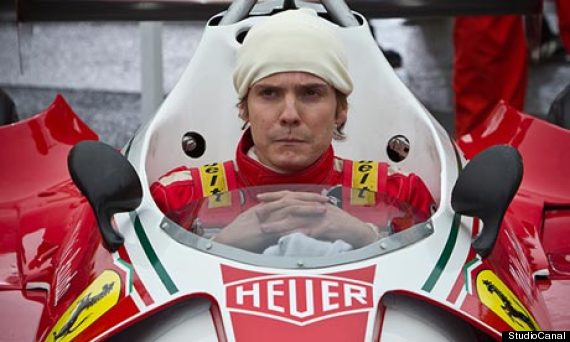
Daniel Brühl, on the other hand, is the modern German actor that every Hollywood film-lover knows. After playing in Tarantino’s huge hit Inglorious Basterds, and his more recent collab with Benedict Cumberbatch in The Fifth Estate, he’s become Hollywood’s go-to-guy for the principal German role, facing only minor competition from Fifth Estate co-star Moritz Bleibtreu and his Austrian Inglorious Basterds co-star, Christoph Waltz. But it has to be said, box-office frequenters aren’t going to stroll into a screening of Rush and see the face they know so well; for this film, Brühl is decked out with what looks like a horrifically uncomfortable mouth piece in an effort to imitate Niki Lauda’s protruding top jaw. If it wasn’t hard enough putting on an Austrian accent, the gumshield-style prosthetic was reason enough for Brühl to be a little down-in-the-mouth.


In fact, word has it that Brühl isn’t the only one that didn’t look himself for the film. Although Niki Lauda himself was a big part of filming, and has reportedly praised the honesty of the film, the movie – in true Hollywood style – massively overplays the rivalry between the racers. Not a huge or particularly upsetting divergence from the truth, but considering this is the entire premise of the plot, a calculated move. Potentially more distressing is that the film is said to underplay Lauda’s wife’s shock at his devastating facial injuries. Perhaps in an attempt to put Lauda’s relationship at a complete contrast to Hunt’s playboy image and failed marriage, the film writes Lauda’s wife as unconditionally understanding, and almost entirely unphased by his life-altering deformity.
So what's actually going on here, is Hollywood acting like an Expressionist painter. Rush vaguely resembles the lives of Lauda and Hunt, but there's a whole lot of artistic licence being used. That said, it's a portrait of the drivers that could have been worse. The danger with presenting real people with actors in a re-written script, is that actors are charged pistols: they come with their own reputation, their own audience, their own personality. So the picture is already half painted before the painter even comes to the canvas. In my opinion, the screen isn't the place for accurate historical representation, there's always going to be a problem with "based on a true story". But that doesn't mean they don't make good films. Rush is as thrilling and fast-paced as you could wish for, but it's at the peril of accuracy.