Showing posts with label student. Show all posts

Friday, 1 April 2016

Apartment Hunting, Comparisons and Compromises

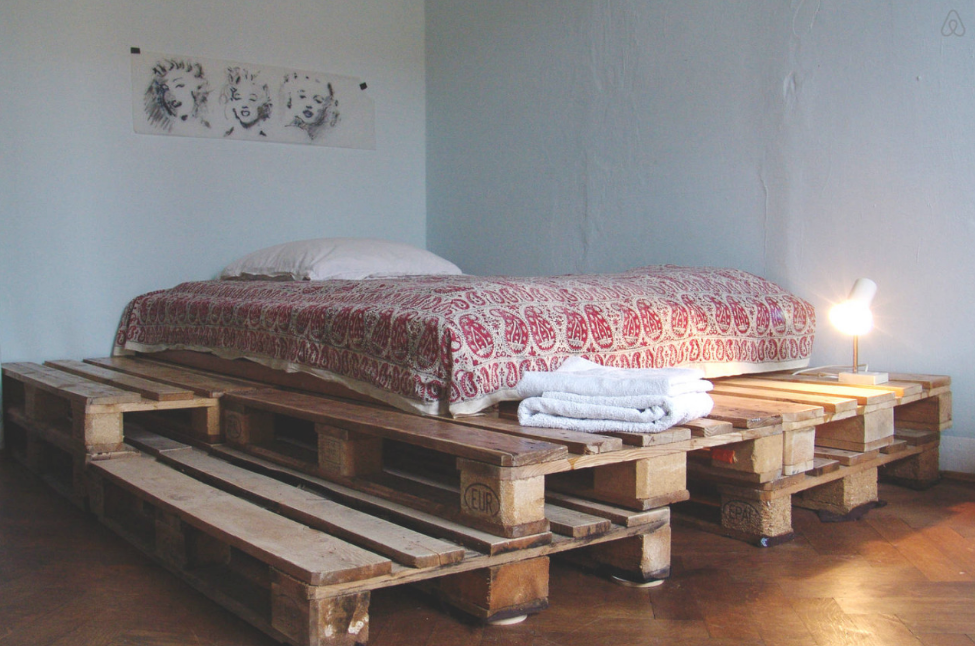
My cosy room in Munich, found on Airbnb
I’ll start this off with a warning: I am hyper-organised. Do not read this as a cautionary tale - if you don’t do exactly what I did to find accommodation in these exact steps you won’t end up on the streets, you might just take a little longer to find your digs. It’s not a big deal, don’t freak out. A lot of students in the year above me told me that they didn’t even sort their accommodation until they arrived in their country of choice. It’s not the end of the world. But here’s how it went for me when I was looking for a place in Munich.

As soon as I got my job in Munich (around April 2015) I started looking for accommodation. I figured I knew I was going to be there - for sure - so waiting would only make it more stressful in the end. And ain’t that the truth. A couple of my friends left it much later, and still didn't have set accommodation a week before they arrived. Now, don’t get me wrong, this is definitely not the worst thing that could happen to you. A lot of students don’t find accommodation until they are already abroad and have stayed in a hostel for a few weeks. But if you ask me, that’s a lot of unnecessary stress. I know that as soon as I step out of my front door, it’s going to be one panic after another: the last thing I want is to know that I don’t have a permanent place to go. So, if you’re a bit more of a free spirit than me, don’t panic about your accommodation. But if you’re a worrier (not to be confused with warrior, which I’m definitely not), then the sooner the better. There’s nothing like crossing “find some bloody accommodation ASAP!!!” off your to-do list.

So once you’ve decided to start, you have to decide where to start. There’s a lot of murmuring about sites like WG-Gesucht (for Germany) and Appartager (for France) - where you can find a room in shared accommodation, usually with other students. Living with other people is definitely the number one recommendation for year abroad - it will strengthen your language skills, be cheaper, and make it easier to find friends. But honestly? Not for me. I spent about 20 minutes looking at the places on appartager and knew it wasn’t my cup of tea. Don’t get me wrong, I loved house-sharing in first and second year, and I loved my housemates. But finding a house share in a very specific area can be really hard. In Paris it’s really tough, and if you’re on ELA (like a couple of my friends) and end up in some town or village in the depths of the Schwarzwald, it’s pretty much a no-go. Honestly, I’d rather live on my own and be able to roll out of bed 30 minutes before school starts than spend an hour and a half commuting to Uni or work every morning just so I could live with other students. But that’s just me. So your first mission is to decide whether you want to house-share or go it alone.

Second - and this might have been decided along with the first - is how close you want to be to your uni/ school/ workplace. As I already said, I savour the idea of avoiding early mornings and long commutes, so in both cases I opted for a place close to my Uni (for Paris) and down the road from my workplace (in Munich). For some people, this will mean deciding between living close to the centre of a city, or living close to the place you need to be. Luckily for me, I’m both studying and working in places which are slap-bang in the city centre, so it wasn’t a problem, but this might be something you have to decide. The downside for me though, was rent.

Rent is the elephant in the room when it comes to finding a place to stay. There’s a lot to take into account. You will be getting more student loan, Erasmus grant (most likely), and for ELA and working students, a wage. But you will want to travel and go a bit wild, so do you want to splash it all on rent? Don’t imagine that you’ll be living the way you do at your home Uni - you’ll want to travel around, go out more, eat out more, and generally be able to kick back. If you’re dishing out XXXX € a month for your fancy apartment in the middle of town, will you still be able to tag along when your friends hop the border to Austria, Prague, Amsterdam? All I will say is that you might want to consider whether you will actually be able to afford to do both, or whether you’re just looking at the massive loan, Erasmus grant, and salary you’ll be getting, and forgetting what else you’ll want to spend that on.

The final thing I will say is take a look at Airbnb. Some lecturers will warn you away from this site, as it was originally founded for short term lets and holiday-goers. Well, Airbnb has now introduced long term lets - or renting in layman’s terms, and you’re completely protected by the site. It’s basically the equivalent of going to a letting agency, but you don’t have to go abroad to do it. There are also reviews from former guests and tenants, which might give you some valuable insight into what you’re looking at. I found both of my places on Airbnb, and it’s been the simplest thing. Give it a chance.

Happy house-hunting!
post signature

Sunday, 13 September 2015

10 Things I’ve learnt during my first two weeks in Paris


1. Paris is beautiful.
I mean that one was obvious, no surprise here. 

2. If you want to do anything official in France (open a bank account, set up a SIM card), you’ll need a lot of paperwork.
Passports, attestation d’assurance, student cards, EHIC cards etc. - you need all of it or you’ll get a blank stare from a French employee.

3. Woody Allen was wrong -
Paris is not more beautiful when it rains.

4. The Euro is absolutely not worth the same amount as the Pound.
When you go shopping you don’t need to drop your jaw because you spent 20 euros in Monoprix on what seemed like a small shop - that’s actually less than £15.

5. French water is not pleasant to drink.
It’s clean, and safe to drink, it’s just not nice to drink.

6. This is not like England - everywhere is closed on a Sunday.
Some sparse grocery stores are open, and businesses in massively touristy areas are open, but your local supermarket might be closed.

7. There is an air raid siren that goes off every 1st Wednesday of the month in Paris.
It’s a WW2 air raid siren that they have maintained in the event of nuclear war. Unsettling if you don’t know what it is! (Yes, I did learn the hard way)

8. French Universities are on the same organisational level as Ron Swanson -
0/10. They will schedule an “orientation” talk. They will give you no information. You will have to stand outside of an office for three weeks before you know where you are meant to be.

9. A) There is a lot of pressure on year abroad to make loads of new friends 
and socialize all day every day, but if you need some alone time to recharge, don’t beat yourself up about it. Watch some Netflix. Go for a walk. Whatever.
B) But it is pretty nice to make a couple of friends 
who you can talk to if you need to. Being alone in a new country is some scary shit, it’s nice to have people there for you if you need them.

10. The Eiffel Tower is just scaffolding. 
This is a confirmed fact. There are a lot of prettier things in Paris.

post signature

Monday, 30 March 2015

The French Mic Drop | Writing a Successful Essay # 1

One of the hardest transitions between A Levels and University is the sudden influx of long, academic essays that you're required to ace in order to succeed. The invaluable PEE you learned in GCSE just doesn't hack it anymore, and you've lost your terra firma. For a lot of students, this is completely new territory; so how do you tackle an essay without rambling? I got my best advice from learning French, and it's helped me towards some of my best work.


Beyond Paris, fashion and romance, the French can definitely boast a long history of brilliant authors. Sartre, Voltaire, Dumas, Flaubert... the list goes on. So it's no wonder that French students learn from an early age how to write a thorough and convincing essay - something students in other countries don't necessarily benefit from. The key? Structure. This is just one part of a strong essay, but without it, an essay falls into the realms of the unintelligible. The French method sets up two methods; Thematic essays, and For/Against essays. The Thematic essay discusses arguments according to common themes; the For/Against essay is more suited to debate questions, and literally argues for and then against. 


Introduction


For both methods, the introduction has the same layout. It comes in three parts:
  1. Context
    This usually comes in the form of a fact or statistic on the subject, and sets up your essay. For example:

    Considering the extensive discussion of the male protagonist following the publication of the novel, analysis of his female counterpart has been comparably limited.
  2. Problem
    You should then pose your problem. This should effectively rephrase the title question of your essay, or pose it from a similar angle, but doesn't necessarily need to be a problem. E.g. For an essay about the role of women in a novel, you might need to consider a common reading of women in the novel, and your "problem" might look like this:

    A phenomenon which has arisen, particularly during the late twentieth century, has been the reading of the female in the novel as an early "femme fatale".
  3. Petit Plan
    This is where you signpost your argument(s) for the essay. In a thematic style, you'll highlight the themes you will cover; in a for/against essay, you can simply state that you are going to analyse both sides of the argument. An example of a thematic essay Petit Plan:

    This essay will attempt to analyse this reading, with attention firstly to the narrative styles, and secondly to the revealing progression of the male's treatment of the female.

Body


This is where your essay changes according to which method you choose. Here's how they both work:

Thematic Essays

This method works best when you don't necessarily have a for and against for each point, or when you have clearly defined subjects which your points come under. It's a particularly strong style for analysis of literary texts. To write a successful thematic essay, you need to have a good plan in your mind: what subjects do you need to tackle? The body of your essay should always follow the order which you have set out in your introduction, so keep that in mind. From there on, you just need to set up your themes and discuss them. Remember not to jump from one theme to another though, use connectives to ensure that your essay flows properly and reads well. Here's an example of the themes you might use for the essay mentioned above:

First theme: Narrative styles block a reading of the female as a femme fatale
Connection: This means that we can't read the female's actions through this narrative, and have to consider her through the narrator's treatment of her.
Second theme: The treatment of the female is progressively aggressive


For/Against Essays

This is also known as the argumentative style, and works well for discussions or debates. For example, if you were to write an essay on the sustainability of nuclear energy, or whether literature should be engaged, then you might choose an argumentative style. It's a relatively simple format, consisting of an argument, followed by a counter argument, etc. This method tends to leave a little more pressure on the conclusion, as no clear opinion arises in the body.

N.B. It's vital that you back up your points with examples for both methods. Somewhere between a third and half of the points you make should be backed up by a strong example - whether it be a statistic, a quote from the novel, or an example from the general world. 

Conclusion


This is where it gets really difficult, and it's the place most students fall down. By this point, it's possible that you're already over your word count, you're tired of talking about this bloody subject, and you can't wait for it to be over. That's definitely true of most of the conclusions I've written. So the best way to tackle it is to not tackle it at all... until the next day. Save the rest of your essay, leave it alone, and come back to it. This way you can read over what you've already got, remind yourself of your argument (and change parts if you need to), and look at it with fresh eyes. But how do you structure it when you do come to writing the conclusion?

  1. Loop it
    The conclusion is a summation of your argument, but don't just spiel out the points you've already made. The first thing a conclusion should do is draw your essay back to the question. You can either pose the question again:

    So what is the role of literature?

    Or you can bring back the problem you posed in your introduction (which is better if this differs a little from your question):

    Rather than the femme fatale the female is named, due to the biased narration and progression of the attitude towards her, it seems preferable to read her as a fiction fatale.

    The second method also works better for academic essays; it shows that you have your own take on the question.
  2. Replay
    When I say replay, I don't mean repeat. This should be a reiteration of your arguments, a brief explanation of how you got there.

    Undoubtedly, the female is not presented [narration: theme 1] as the victim by the novel: it is only through rejection of the biased narration that we can reveal her true role in the novel. Intensely idealised by the male, [treatment: theme 2] she is trapped between ideals and effectively becomes a victim. 
  3. Personal Opinion
    This is your chance to shine. I once read that if you can't imagine yourself dropping the mic after your conclusion, then it's not strong enough. No matter what you are writing about, you need to come across as though you have incredible, strong ideas on the subject, and you need to believe your essay communicates them.

    In fact, the exhibition of her as femme fatale by the narrator is an oppressive misrepresentation, microcosmic of the era’s attitude towards society’s female. [MIC DROP]


No lie - you need to go Kanye style on this. If you love your essay as much as Kanye loves himself, there is no way any marker could fault you for it. But really, once you've got a strong, supported set of arguments, well introduced, well concluded, you can conquer the world. Probably. 

Good luck!

post signature