
Showing posts with label year abroad. Show all posts
Showing posts with label year abroad. Show all posts
Sunday, 24 July 2016
Staying Safe in a Crisis Abroad | The Munich Attacks

Wednesday, 22 June 2016
A Weekend in Prague
 |
| Staroměstské náměstí, Prague's Old Town Square |
 |
| Vlatava River |
 |
| St Vitus Cathedral |
 |
| Juice stand near Petrin Tower |
 |
| Petrin Tower |
Friday, 1 April 2016
Apartment Hunting, Comparisons and Compromises
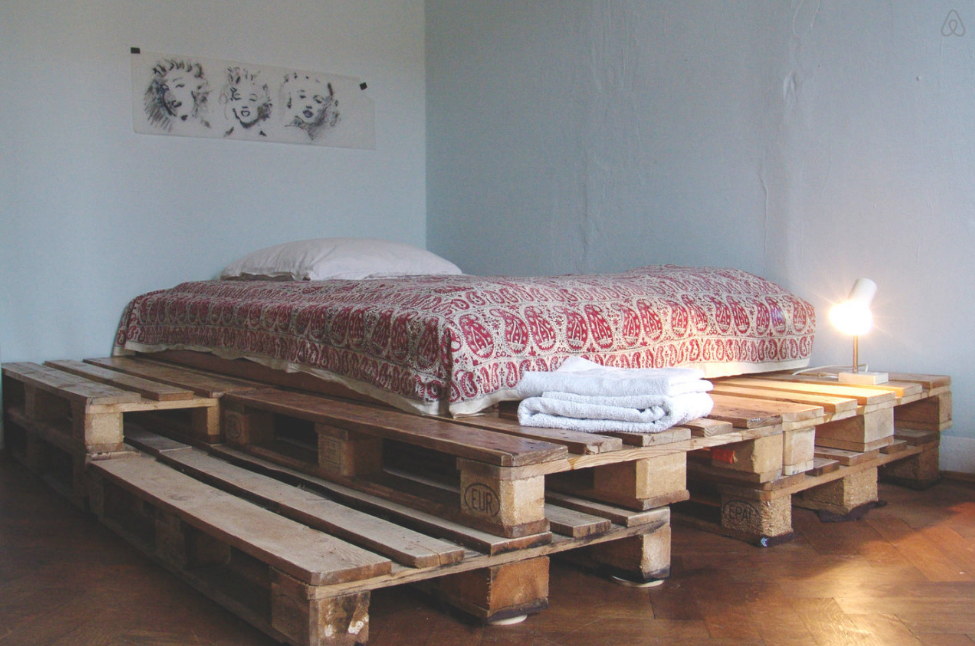 |
| My cosy room in Munich, found on Airbnb |
I’ll start this off with a warning: I am hyper-organised. Do not read this as a cautionary tale - if you don’t do exactly what I did to find accommodation in these exact steps you won’t end up on the streets, you might just take a little longer to find your digs. It’s not a big deal, don’t freak out. A lot of students in the year above me told me that they didn’t even sort their accommodation until they arrived in their country of choice. It’s not the end of the world. But here’s how it went for me when I was looking for a place in Munich.
As soon as I got my job in Munich (around April 2015) I started looking for accommodation. I figured I knew I was going to be there - for sure - so waiting would only make it more stressful in the end. And ain’t that the truth. A couple of my friends left it much later, and still didn't have set accommodation a week before they arrived. Now, don’t get me wrong, this is definitely not the worst thing that could happen to you. A lot of students don’t find accommodation until they are already abroad and have stayed in a hostel for a few weeks. But if you ask me, that’s a lot of unnecessary stress. I know that as soon as I step out of my front door, it’s going to be one panic after another: the last thing I want is to know that I don’t have a permanent place to go. So, if you’re a bit more of a free spirit than me, don’t panic about your accommodation. But if you’re a worrier (not to be confused with warrior, which I’m definitely not), then the sooner the better. There’s nothing like crossing “find some bloody accommodation ASAP!!!” off your to-do list.
So once you’ve decided to start, you have to decide where to start. There’s a lot of murmuring about sites like WG-Gesucht (for Germany) and Appartager (for France) - where you can find a room in shared accommodation, usually with other students. Living with other people is definitely the number one recommendation for year abroad - it will strengthen your language skills, be cheaper, and make it easier to find friends. But honestly? Not for me. I spent about 20 minutes looking at the places on appartager and knew it wasn’t my cup of tea. Don’t get me wrong, I loved house-sharing in first and second year, and I loved my housemates. But finding a house share in a very specific area can be really hard. In Paris it’s really tough, and if you’re on ELA (like a couple of my friends) and end up in some town or village in the depths of the Schwarzwald, it’s pretty much a no-go. Honestly, I’d rather live on my own and be able to roll out of bed 30 minutes before school starts than spend an hour and a half commuting to Uni or work every morning just so I could live with other students. But that’s just me. So your first mission is to decide whether you want to house-share or go it alone.
Second - and this might have been decided along with the first - is how close you want to be to your uni/ school/ workplace. As I already said, I savour the idea of avoiding early mornings and long commutes, so in both cases I opted for a place close to my Uni (for Paris) and down the road from my workplace (in Munich). For some people, this will mean deciding between living close to the centre of a city, or living close to the place you need to be. Luckily for me, I’m both studying and working in places which are slap-bang in the city centre, so it wasn’t a problem, but this might be something you have to decide. The downside for me though, was rent.
Rent is the elephant in the room when it comes to finding a place to stay. There’s a lot to take into account. You will be getting more student loan, Erasmus grant (most likely), and for ELA and working students, a wage. But you will want to travel and go a bit wild, so do you want to splash it all on rent? Don’t imagine that you’ll be living the way you do at your home Uni - you’ll want to travel around, go out more, eat out more, and generally be able to kick back. If you’re dishing out XXXX € a month for your fancy apartment in the middle of town, will you still be able to tag along when your friends hop the border to Austria, Prague, Amsterdam? All I will say is that you might want to consider whether you will actually be able to afford to do both, or whether you’re just looking at the massive loan, Erasmus grant, and salary you’ll be getting, and forgetting what else you’ll want to spend that on.
The final thing I will say is take a look at Airbnb. Some lecturers will warn you away from this site, as it was originally founded for short term lets and holiday-goers. Well, Airbnb has now introduced long term lets - or renting in layman’s terms, and you’re completely protected by the site. It’s basically the equivalent of going to a letting agency, but you don’t have to go abroad to do it. There are also reviews from former guests and tenants, which might give you some valuable insight into what you’re looking at. I found both of my places on Airbnb, and it’s been the simplest thing. Give it a chance.
Happy house-hunting!
Wednesday, 17 February 2016
Teach, Learn or Earn?

One of the earliest decisions you’ll have to make about your Year Abroad is which path you want to take: teaching with the British Council; studying at a partner university or finding a work placement or internship. It’s tough to know what you want to do, but chances are your Uni has set the timer on your decision. Panic sets in. Here are a few things you might want to consider when you’re making the choice.
Before you set your sights on a particular city, even a particular country, you should probably take a second to consider how you want to spend your time. It’s great knowing where you want to go, but knowing what you want to do there? Not so simple. And even if you’ve already decided where you want to be, you have to consider whether that city or country offers the path you want to take.
Work Placements and Internships
I’m not proud to admit it, but I’m a prime example of the jump-the-gun mistake. In the summer after first year, I visited Paris for a few days. That was it - the decision was made. That’s where I’d spend my time in France. It didn’t even cross my mind that it might be hard to find a job in one of the world’s most competitive cities. To add insult to injury, I was dead set on working in Berlin for my second semester. Same mistake, different city. Now don’t get me wrong, a lot of my course mates have found great jobs in capital cities - Paris, Vienna, Berlin etc. But I applied for 35 jobs in and around Berlin before I decided that the process would be a lot less painful if I widened my search. Narrowing your search to a specific city isn’t impossible, but it’s just that - narrow. If you’re looking for a specific kind of job, looking for it in a specific city is going to be hard. I decided to let go of my Dickes B dream so that I could find a job I had experience in, and I got myself a placement at a firm in Munich - an equally beautiful city. My advice is that if you’re dead set on a city, be flexible about the work that you do. If you’re not flexible about the work you do, be flexible about where you do it.
Studying
Alternatively, you could check whether your University has a partner Uni in the city you want to land in. Most Universities are partnered with at least one University in the capital cities of big countries (Germany, France, Spain etc). The bonus here is that the application process for a partner university is a lot simpler than looking for a job, and in most cases, you’re guaranteed a place by your home Uni. One you’re in, you’re in. I gave up the job search in Paris and settled on studying at the Sorbonne. Not a bad decision, considering I didn’t have to do any more laborious Skype interviews or form-filling. The only downside is that I settled on not receiving an extra income… in one of the world’s most expensive cities. Every silver lining has a grey cloud though, right?
If your Uni doesn’t have a partner in the city you want to be in, and you can’t find a job there which you have experience in, then you’ve got the two same options: look in other cities, or look for other jobs.
I won’t say that studying abroad won’t be taxing - none of the three options will. But at most universities, the grades you get in your exams don’t count towards your degree - you just have to pass. In some cases, if you fail, you can even pass so long as you can prove you tried. Don’t let this fool you into thinking it’s another first year though, your uni will probably be very stringent in checking that you’ve tried.
Teaching
If you ever attended a Languages Open Day before you came to Uni, you probably heard the glowing reviews of being an ELA (English Language Assistant) abroad. They’re not wrong. You get paid, the hours are great if you want to travel and socialize, and it looks great if you want teaching experience on your CV.
However, if we continue the thread of setting your sights on a specific city, then be aware of ELA. When you apply, you are asked if you have a preferred area. Do not take this to mean that you will automatically be placed there. Some candidates (who spend hours writing a very compelling account of why they want to be in that area) are placed in their desired county, Bundesland, Province etc. That said, if we take three of my closest friends as an example, all of which applied to ELA:
Friend One applied to Bavaria, wrote a compelling application about why she wanted to teach in Munich, and was placed in Munich.
Friend Two also applied to Bavaria, wrote a compelling application geared toward Munich, and wasn’t placed in Munich, but was placed in Bavaria.
Friend Three applied to Bavaria, but was placed in Düsseldorf - at the other end of Germany.
Luckily Friend Three wasn’t dead set on Bavaria, but just be aware of setting your heart on a city if you’re choosing to teach.
It’s also important to remember that the British Council’s system of placing candidates is very long - the majority of candidates won’t find out where exactly they are until the middle of the summer. Some don’t find out until a few weeks before they have to leave. This can make things really tough with finding accommodation, so if that’s something that worries you, you’ll have to weigh the financial and social benefits of ELA with the potential problems with location and accommodation.
The best thing to do is decide what you want to do before you think about where you want to do it. It’s much easier to decide where to go when you know what you want to do there. If you, like me, know that you don’t want to teach, then you should think about which Universities are available to you, and where you’ll be able to find a job. If you’re choosing ELA, you’ll need to be prepared either to spend a while writing your application, or let go of the idea of getting your dream city. In all honesty, this step is about flexibility and compromises, but also knowing what you want. At the end of the day, you need to figure out what will make you most comfortable, and go from there.
Friday, 15 January 2016
The Journey to Work | Finding a Job Abroad
 |
| Sunset drinks on the Isar with my colleagues |
Tuesday, 20 October 2015
Tourism time
 |
| The English Patient - second book on our Cinema list after Amadeus |

Back to the Louvre to look at some of the Renaissance pieces I've wanted to see.

A break outside the Notre Dame called for a little silhouette of one of my favourite Youtubers. Never mind being inspired by such beautiful architecture to do great an incredible thing - YouTube it is.


Tuesday, 13 October 2015
Surviving Sign-Up at the Sorbonne
First step is choosing your courses. There are a few things you need to look out for when you are picking your classes, and finding these things first will let you skip the awkward "Oh crap, that doesn't work, now I have to do it all again" phase. Firstly, make sure your classes don't clash - that goes without saying. None of us are Hermione, we don't have time turners, and we can't be in two places at once, so make sure your classes aren't at the same time. Secondly, take account of which campus your classes are on. I signed up for two classes which were one after the other, and found out that the second one was on a campus which was 40 minutes away by metro. Not ideal. None of us can teleport either, so make sure you have time to get to your classes. Finally, check the assessment type. If you struggle with exams, try not to take courses which have a heavy set of exams; if you're bad at coursework, do the opposite.
Cater to you
It's not always possible to sign up just for classes you think you will enjoy, because they might clash. That said, try and find as many classes that fit into your timetable that you will actually enjoy. Studying in a new language is hard enough as it is; you don't need the added annoyance of being bored in every single class you go to. It makes it harder to concentrate, harder to revise, and harder to pass. If you've centred your degree at home around Culture, and you enjoy it, then do the same abroad. If you've focused it on Linguistics or Translation, do the same.
Sunday, 13 September 2015
10 Things I’ve learnt during my first two weeks in Paris
1. Paris is beautiful.
I mean that one was obvious, no surprise here.
I mean that one was obvious, no surprise here.
2. If you want to do anything official in France (open a bank account, set up a SIM card), you’ll need a lot of paperwork.
Passports, attestation d’assurance, student cards, EHIC cards etc. - you need all of it or you’ll get a blank stare from a French employee.
Passports, attestation d’assurance, student cards, EHIC cards etc. - you need all of it or you’ll get a blank stare from a French employee.
3. Woody Allen was wrong -
Paris is not more beautiful when it rains.
Paris is not more beautiful when it rains.
4. The Euro is absolutely not worth the same amount as the Pound.
When you go shopping you don’t need to drop your jaw because you spent 20 euros in Monoprix on what seemed like a small shop - that’s actually less than £15.
When you go shopping you don’t need to drop your jaw because you spent 20 euros in Monoprix on what seemed like a small shop - that’s actually less than £15.
5. French water is not pleasant to drink.
It’s clean, and safe to drink, it’s just not nice to drink.
It’s clean, and safe to drink, it’s just not nice to drink.
6. This is not like England - everywhere is closed on a Sunday.
Some sparse grocery stores are open, and businesses in massively touristy areas are open, but your local supermarket might be closed.
Some sparse grocery stores are open, and businesses in massively touristy areas are open, but your local supermarket might be closed.
7. There is an air raid siren that goes off every 1st Wednesday of the month in Paris.
It’s a WW2 air raid siren that they have maintained in the event of nuclear war. Unsettling if you don’t know what it is! (Yes, I did learn the hard way)
It’s a WW2 air raid siren that they have maintained in the event of nuclear war. Unsettling if you don’t know what it is! (Yes, I did learn the hard way)
8. French Universities are on the same organisational level as Ron Swanson -
0/10. They will schedule an “orientation” talk. They will give you no information. You will have to stand outside of an office for three weeks before you know where you are meant to be.
0/10. They will schedule an “orientation” talk. They will give you no information. You will have to stand outside of an office for three weeks before you know where you are meant to be.
9. A) There is a lot of pressure on year abroad to make loads of new friends
and socialize all day every day, but if you need some alone time to recharge, don’t beat yourself up about it. Watch some Netflix. Go for a walk. Whatever.
B) But it is pretty nice to make a couple of friends
who you can talk to if you need to. Being alone in a new country is some scary shit, it’s nice to have people there for you if you need them.
10. The Eiffel Tower is just scaffolding.
This is a confirmed fact. There are a lot of prettier things in Paris.
Sunday, 1 March 2015
In the name of Art

 |
| A 10-minute watercolour inspired by a film poster for Blue Velvet |
 |
| One of my ultimate mantras |
 |
| Ok, so I'm not so creative with my concepts. |
Subscribe to:
Posts (Atom)