Sunday, 13 September 2015

10 Things I’ve learnt during my first two weeks in Paris


1. Paris is beautiful.
I mean that one was obvious, no surprise here. 

2. If you want to do anything official in France (open a bank account, set up a SIM card), you’ll need a lot of paperwork.
Passports, attestation d’assurance, student cards, EHIC cards etc. - you need all of it or you’ll get a blank stare from a French employee.

3. Woody Allen was wrong -
Paris is not more beautiful when it rains.

4. The Euro is absolutely not worth the same amount as the Pound.
When you go shopping you don’t need to drop your jaw because you spent 20 euros in Monoprix on what seemed like a small shop - that’s actually less than £15.

5. French water is not pleasant to drink.
It’s clean, and safe to drink, it’s just not nice to drink.

6. This is not like England - everywhere is closed on a Sunday.
Some sparse grocery stores are open, and businesses in massively touristy areas are open, but your local supermarket might be closed.

7. There is an air raid siren that goes off every 1st Wednesday of the month in Paris.
It’s a WW2 air raid siren that they have maintained in the event of nuclear war. Unsettling if you don’t know what it is! (Yes, I did learn the hard way)

8. French Universities are on the same organisational level as Ron Swanson -
0/10. They will schedule an “orientation” talk. They will give you no information. You will have to stand outside of an office for three weeks before you know where you are meant to be.

9. A) There is a lot of pressure on year abroad to make loads of new friends 
and socialize all day every day, but if you need some alone time to recharge, don’t beat yourself up about it. Watch some Netflix. Go for a walk. Whatever.
B) But it is pretty nice to make a couple of friends 
who you can talk to if you need to. Being alone in a new country is some scary shit, it’s nice to have people there for you if you need them.

10. The Eiffel Tower is just scaffolding. 
This is a confirmed fact. There are a lot of prettier things in Paris.

post signature

Tuesday, 8 September 2015

Paris est une fête

As you may know from an earlier post, this academic year is the start of my Year Abroad: 5 months in France, and 6 in Germany. This week, I started the journey. Paris is my new home for five months, and it's terrifying.
Scary as it might be to move across the channel - to a place I don't know, with people I've never met and a language I hardly speak - it's also exciting to think that this is going to be a chapter in my life I will never forget. How many people can say, "I lived in Paris"? How many can say that they walked along the Seine on their days off; that their classroom is literally 500 meters from the Notre Dame? Not many. 
So I'm turning my cheek on the anxiety I'm feeling, and planning a great 5 months in a great city, hopefully with great people and great experiences. It's been a bizarre week, but a great one already. I'm not in class yet, so I've got a whole load of free time to wander around the city and get a feel for the area. 
My first mission was to figure out the route to Uni, so I set off on what turned out to be one of the most scenic strolls of my life to date. 
Jardin du Luxembourg
Rue du Vaugirard
At this point, it was starting to feel like I was living in a very realistic dream. By the time I got to the University, I was pretty sure this was an Inception moment, because this is what the Sorbonne building looks like.
Université Sorbonne Paris IV
The Instagrammer's dream. I have no idea what it will be like going to the actual classes, or if I will even survive the French language, but it's safe to say that I'm living in a fairytale at the moment.
post signature

Wednesday, 8 April 2015

Have we met? | John Wick Review

Thanks to Cineworld Unlimited, last night I was afforded a viewing of Keanu Reeves’ new film, John Wick, a week before the box office opens. The movie poster - Reeves with smoking guns in both hands, and a black suit reminiscent of his matrix days - was promising. But I hadn’t seen any sign of this film in movie theatres yet; no preview, no trailer, no trace. I didn’t know what to expect. And yet somehow, this film was not what I expected. 


The first twenty minutes were extremely calm; even sombre. We meet John Wick, a normal guy, who has just lost his wife to a mystery illness. Anyone with a soft-centred heart is roped in when a tiny puppy, a gift from Wick’s late wife, arrives on his doorstep. We’re reminded of PS I Love You. We see a grieving man getting used to Daisy, a puppy he wasn’t expecting, but probably needed. We’re attached. To them both. 

So heart strings are sufficiently pulled. But don’t be fooled - the atmosphere quickly changes. In a gas-station exchange, we meet Josef (played by Alfie Allen with an impressive russian accent), and the tension in the film is revealed. What is that tension? Wick’s car. Anti-climax? I thought so. At this point I can’t tell who the target audience is - the puppy-loving softie or the car-crazed lad. Give it a few scenes, and we find out exactly what is going on here. 

Brace yourselves, you’re not only about to hear a (very mild) spoiler, but you’re likely going to be a little disturbed. We’re in Wick’s apartment in the middle of the night. Daisy is awake. Wick pulls himself out of bed to let his new puppy out. But, of course, as he trudges down the stairs, he discovers that three Assassin’s Creed-style cloaked figures are waiting for him in his living room. No doubt, a flawlessly choreographed fight scene follows, and Wick is floored. Daisy is crying. A figure is unhooded. It’s Josef, here to claim Wick’s car. Dramatic, right? But what follows is one of the most unnecessary sources of revenge film has ever seen. Josef, tired of the puppy’s yelping and presumably devoid of any human sentiment, utters the words “Shut that dog up”. I don’t need to share gorey details for you to understand what’s happened here. Wick wakes up an indefinite amount of time later, shares a traumatic scene with Daisy - now heart-breakingly lifeless - and finds that his car is gone too. In true Hollywood style, Wick’s fuse is lit, and he spends the rest of his screen time on a revenge-fuelled, murderous rampage in search of Josef.


I’ll admit it, I’m a dog lover - I would die for my black labs, and that’s probably why I felt like this scene was so unnecessary. But animal cruelty aside, I still have a problem with this film. 

Let’s break it down to its basics. 
  1. A guy who wants revenge 
  2. Fast cars 
  3. The Russian Mob 
  4. Guns 
  5. Men 
  6. Bourbon 
It’s everything we’ve seen before, crammed into one film. Don’t get me wrong, it will entertain, but in every scene you’ll find yourself thinking, “Hey, that’s just like (any other fast-car mafia movie)”. The cars are fast, Wick is furious, I am experiencing déjà vu. 

What’s worse is that this movie is crammed full of men. Sure, I sound like a broken record, but it’s absolutely true. There is one woman of note in the entire film, and she is cast as a modern femme fatale - she’s a hot, heeled, hired assassin. The character is an unbearable cliché. If you grasp at straws, there are two other females in the movie… one - Wick’s wife - dies before the film starts, and the other - Daisy - is introduced just to be killed off. So we’re looking at a film where we’re resorting to female dogs to find the women. 

Like I said, this film will keep you entertained for a couple of hours. It’s fast, it’s familiar, and it’s featuring Reeves. But it’s nothing new, it’s textbook, and it’s shamefully male-orientated. All I can really conclude is that this is a man’s movie, and I'm no man. 

Sunday, 5 April 2015

The Formidable French | #4

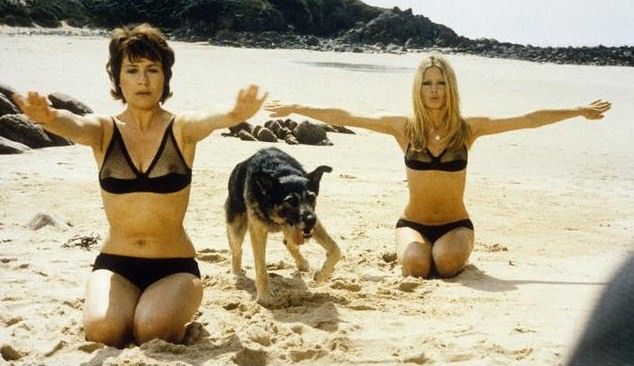
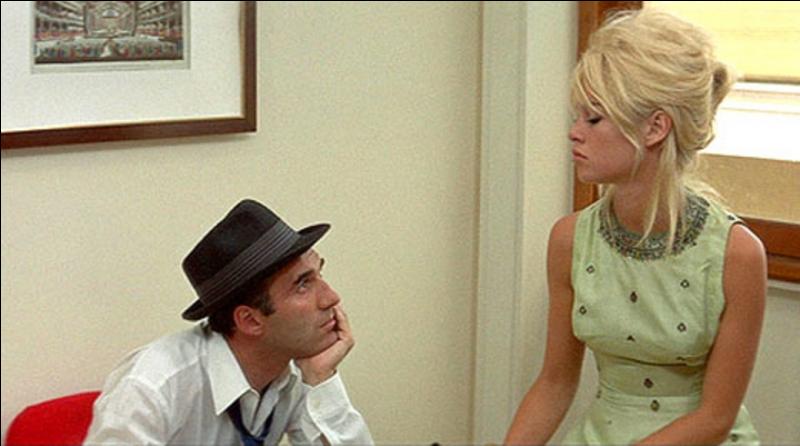
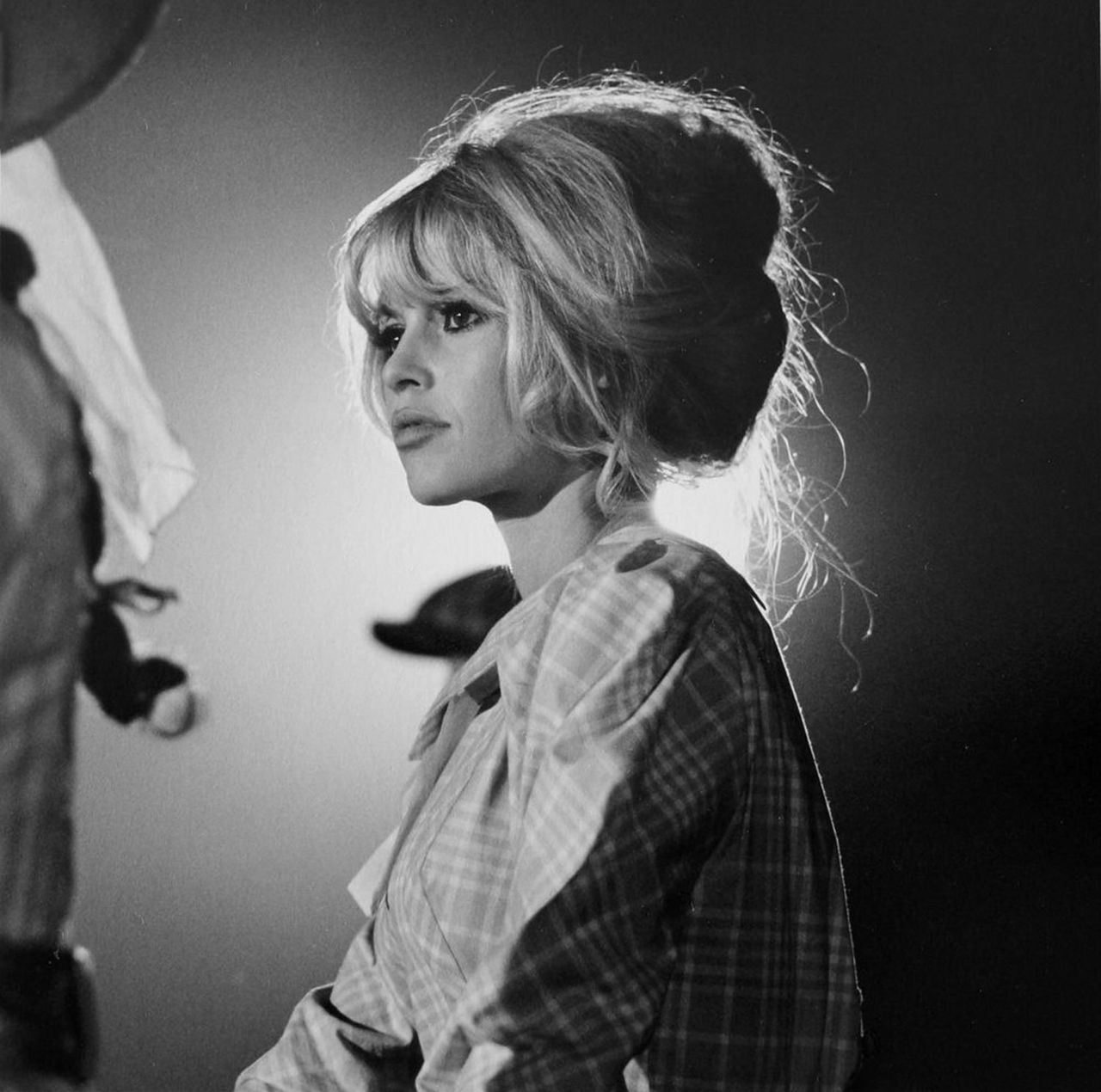
There's no way that any list of stunning French people could be compiled without including the original sex kitten, notre BB. So here she is, in all her glory.


Brigitte Bardot was born in Paris in 1934, and quickly rose to fame thanks to her striking features. She became one of the world's first "sex-kittens": women whose beauty is based in their teenage image. She played a lot of controversial roles, including a role in And God Created Woman - which was heralded by feminists. In fact, she's stirred quite a storm in feminist theory, and was the subject of Simone de Beauvoir's essay The Lolita Syndrome, which discusses teenage girls as sexual objects, and the culture of abuse. 

Aside from the Lolita aesthetic, she brought that gorgeous deliberately-messy style to the world: a mix between wind-swept and perfectly styled hair which we all strive for.

Bardot knew that her capitol was her body, and her roles exploited it. Jean Luc Godard's cast her in Le Mépris as a critique of exactly this - the star body. The problem, though, with depending on your youthful beauty for your career is that, of course, it's finite. As Bardot's looks began to fade, she turned her hand to animal rights activism, and all but disappeared from the silver screen.


post signature

Thursday, 2 April 2015

The Heel Hindrance | The Media's Female Detective

The strong female detective: a feminist liberation, right? Hold that thought. Who's the first female police officer, detective, copper that comes to your mind? The classic Frances McDormund in Fargo? One of the Criminal Minds chicks, maybe, Prentiss? Recently, I started watching the Danish hit-series The Killing, another crime drama with a female detective as the lead. First few episodes, I'm hooked. But then I notice it. The real killer that haunts every show, every film with a female officer - the high heel.


There's nothing wrong with a lady loving her heels. Stiletto, boot, wedge or little blacks, they brighten our wardrobes and make us feel like we can conquer the world. But when I see an unstoppable ladies run into a crime scene or chase a killer, I want to see her being the badass that she is... I don't want to see her struggling to run because she's been stuffed into a heeled boot by a costume designer.
 
Our beloved Emily Prentiss sporting a gorgeously unnecessary black boot in pursuit of a criminal 
Case in point: above, our much-loved Prentiss from Criminal Minds crouches behind a car, pistol in hand, focused on her target, and nicely outfitted in some beautiful black heeled boots. Necessary? Doubtful. "But the Criminal Minds ladies are called out without warning - they don't have time to change!" I hear you cry as you tilt your trilby. I find it hard to believe that in a show where there is a lengthy brief on a private jet, frequent mentions of the "go-bag", and scenes in which the team have had time to put on bullet proof vests, there has been no time for the ladies to slip their heels off. I call bullsh**.
Criminal Minds isn't the only guilty party. Three episodes into the original Danish version of The Killing, detective Sarah Lund has been on a murder case for at least 12 hours. She's dropped her son off at his Grandmother's, sauntered in and out of the office, and gone back to see her Mum. But when she gets within 10 meters of the perp and starts to chase him, what rears its ugly head?

It's blurry, but it's there. When you see it...
Hidden under those from-the-naughties flared jeans are a pair of heeled boots bathed in from-the-naughties female objectification. Clearly this phenomenon isn't purebred Hollywood. But it might be where it came to be.

We all know the phrase femme fatale. The "independent", sexy, fierce woman who wears tight fitting dresses and seductive black heels. She was Hollywood's original "strong woman" (although we've come to know that she wasn't that "strong" at all). Hollywood told us she didn't need a man, thought for herself and had everyone under her thumb. And here's where we see the parallel. Hollywood (and apparently the media in general) wants us to think we're seeing a brilliant, well-written female character, because they know that third-wave feminism demands to see one. But instead of taking the time to write brilliant women, they've just hidden the things that made the femme fatale so obviously man-driven under a thin veil of "independence". 

Take Sarah Lund as an example. What they tell us: she's been the chief detective for what seems like a while; she has a sharp mind; she is a single mum; she doesn't need to wear skimpy outfits to be gorgeous. So she must be a well-written female, right? Wrong. What they don't tell us, but show us: her subplot revolves around her being a mother and giving up her job for that role; she's always wearing heels, despite her job requiring sensible shoes; she wants to move departments, but her male boss is having none of it, and stops her by playing the empathy card and listing off the victim's grievances. What's worse is that she's pitted against the macho new guy, who is the epitome of a male detective, making her, what, the epitome of a female detective? 

I'm not the only one this gets to. This kind of criticism really is everywhere. We're sick of it. So why does it keep happening. We've seen it before and we'll see it again, women were brought onto the silver screen as the object of the gaze, and nearly 100 years, 3 feminist movements and an endless battle against it, women still are the object of the gaze. Even if it is hidden under their flares.
 
post signature

Monday, 30 March 2015

The French Mic Drop | Writing a Successful Essay # 1

One of the hardest transitions between A Levels and University is the sudden influx of long, academic essays that you're required to ace in order to succeed. The invaluable PEE you learned in GCSE just doesn't hack it anymore, and you've lost your terra firma. For a lot of students, this is completely new territory; so how do you tackle an essay without rambling? I got my best advice from learning French, and it's helped me towards some of my best work.


Beyond Paris, fashion and romance, the French can definitely boast a long history of brilliant authors. Sartre, Voltaire, Dumas, Flaubert... the list goes on. So it's no wonder that French students learn from an early age how to write a thorough and convincing essay - something students in other countries don't necessarily benefit from. The key? Structure. This is just one part of a strong essay, but without it, an essay falls into the realms of the unintelligible. The French method sets up two methods; Thematic essays, and For/Against essays. The Thematic essay discusses arguments according to common themes; the For/Against essay is more suited to debate questions, and literally argues for and then against. 


Introduction


For both methods, the introduction has the same layout. It comes in three parts:
  1. Context
    This usually comes in the form of a fact or statistic on the subject, and sets up your essay. For example:

    Considering the extensive discussion of the male protagonist following the publication of the novel, analysis of his female counterpart has been comparably limited.
  2. Problem
    You should then pose your problem. This should effectively rephrase the title question of your essay, or pose it from a similar angle, but doesn't necessarily need to be a problem. E.g. For an essay about the role of women in a novel, you might need to consider a common reading of women in the novel, and your "problem" might look like this:

    A phenomenon which has arisen, particularly during the late twentieth century, has been the reading of the female in the novel as an early "femme fatale".
  3. Petit Plan
    This is where you signpost your argument(s) for the essay. In a thematic style, you'll highlight the themes you will cover; in a for/against essay, you can simply state that you are going to analyse both sides of the argument. An example of a thematic essay Petit Plan:

    This essay will attempt to analyse this reading, with attention firstly to the narrative styles, and secondly to the revealing progression of the male's treatment of the female.

Body


This is where your essay changes according to which method you choose. Here's how they both work:

Thematic Essays

This method works best when you don't necessarily have a for and against for each point, or when you have clearly defined subjects which your points come under. It's a particularly strong style for analysis of literary texts. To write a successful thematic essay, you need to have a good plan in your mind: what subjects do you need to tackle? The body of your essay should always follow the order which you have set out in your introduction, so keep that in mind. From there on, you just need to set up your themes and discuss them. Remember not to jump from one theme to another though, use connectives to ensure that your essay flows properly and reads well. Here's an example of the themes you might use for the essay mentioned above:

First theme: Narrative styles block a reading of the female as a femme fatale
Connection: This means that we can't read the female's actions through this narrative, and have to consider her through the narrator's treatment of her.
Second theme: The treatment of the female is progressively aggressive


For/Against Essays

This is also known as the argumentative style, and works well for discussions or debates. For example, if you were to write an essay on the sustainability of nuclear energy, or whether literature should be engaged, then you might choose an argumentative style. It's a relatively simple format, consisting of an argument, followed by a counter argument, etc. This method tends to leave a little more pressure on the conclusion, as no clear opinion arises in the body.

N.B. It's vital that you back up your points with examples for both methods. Somewhere between a third and half of the points you make should be backed up by a strong example - whether it be a statistic, a quote from the novel, or an example from the general world. 

Conclusion


This is where it gets really difficult, and it's the place most students fall down. By this point, it's possible that you're already over your word count, you're tired of talking about this bloody subject, and you can't wait for it to be over. That's definitely true of most of the conclusions I've written. So the best way to tackle it is to not tackle it at all... until the next day. Save the rest of your essay, leave it alone, and come back to it. This way you can read over what you've already got, remind yourself of your argument (and change parts if you need to), and look at it with fresh eyes. But how do you structure it when you do come to writing the conclusion?

  1. Loop it
    The conclusion is a summation of your argument, but don't just spiel out the points you've already made. The first thing a conclusion should do is draw your essay back to the question. You can either pose the question again:

    So what is the role of literature?

    Or you can bring back the problem you posed in your introduction (which is better if this differs a little from your question):

    Rather than the femme fatale the female is named, due to the biased narration and progression of the attitude towards her, it seems preferable to read her as a fiction fatale.

    The second method also works better for academic essays; it shows that you have your own take on the question.
  2. Replay
    When I say replay, I don't mean repeat. This should be a reiteration of your arguments, a brief explanation of how you got there.

    Undoubtedly, the female is not presented [narration: theme 1] as the victim by the novel: it is only through rejection of the biased narration that we can reveal her true role in the novel. Intensely idealised by the male, [treatment: theme 2] she is trapped between ideals and effectively becomes a victim. 
  3. Personal Opinion
    This is your chance to shine. I once read that if you can't imagine yourself dropping the mic after your conclusion, then it's not strong enough. No matter what you are writing about, you need to come across as though you have incredible, strong ideas on the subject, and you need to believe your essay communicates them.

    In fact, the exhibition of her as femme fatale by the narrator is an oppressive misrepresentation, microcosmic of the era’s attitude towards society’s female. [MIC DROP]


No lie - you need to go Kanye style on this. If you love your essay as much as Kanye loves himself, there is no way any marker could fault you for it. But really, once you've got a strong, supported set of arguments, well introduced, well concluded, you can conquer the world. Probably. 

Good luck!

post signature

Sunday, 1 March 2015

In the name of Art

You might be sensing a pattern by now... Sorry Schäzte, second year is proving a hell of a lot more hectic than expected! First semester climaxed with an extremely stressful bout of exams, and second semester has launched us straight into the winding vortex of deadlines and presentations. Take no prisoners though, right? Yeah, I'm not sure about that one either.

But there is good news... After scuffling and scampering around, desperately trying to pull together plans for my Year Abroad, I received a superbly uplifting email a few weeks ago. So what are les nouvelles? Well...


So panic over (for first semester at least)! Come September, I'll be jet setting off to la Ville Lumière to study at the Sorbonne! Can you hear the excited squeals? All excitement aside, I'm starting to get unbearably anxious about the workload I'm going to face - not only will all teaching and exams be in French, but at one of the world's most prestigious Universities, it would be plain foolish not to expect a heavy workload. I suppose now's the time to start getting my language up to scratch (God help me). What's more, the search for a job in Germany or Austria for the second semester continues. 

In the mean time, I've been busy with an old hobby of mine. You first saw it in the summer, and it has surfaced again over Christmas and through this painfully cold winter: the solace of watercolours. Admittedly, I've been painting a lot more than I should. Something about an impending deadline just makes me want to paint, what can I say? Here's a look at a couple:

A 10-minute watercolour inspired by a film poster for Blue Velvet
One of my ultimate mantras
Ok, so I'm not so creative with my concepts.

post signature